Serving Eagle Pass, TX and surrounding areas. (830) 213-7411
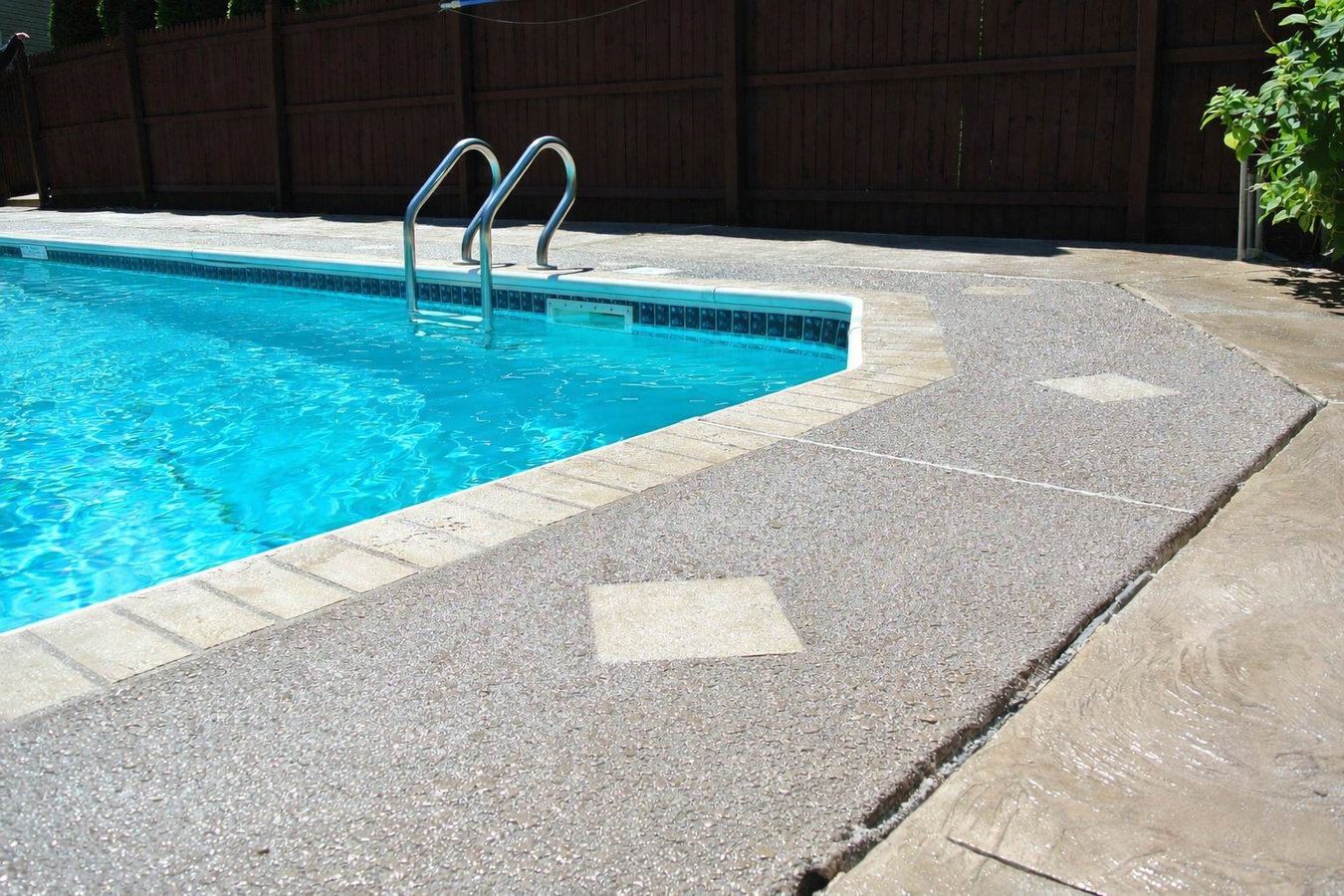
Eagle Pass Precision Concrete is a concrete contractor serving San Antonio, TX, building pool decks, driveways, slab foundations, patios, and flatwork built for Bexar County clay soil, brutal summer heat, and the full range of San Antonio home types from inside Loop 410 to the newer subdivisions past Loop 1604. We have served this region since 2018 and respond to every inquiry within 1 business day.
San Antonio summers push temperatures well into the 90s and above for months at a time, and the areas around residential pools see heavy barefoot and wet-foot traffic from June through September. A concrete pool deck finished with the right texture holds up to that traffic, stays cooler underfoot than plain gray concrete, and does not heave or crack the way a poorly prepared deck will on the clay soils common across Bexar County.
Concrete is the standard driveway material across most of San Antonio, but the clay soils beneath Bexar County properties cause driveways to crack and heave faster than most homeowners expect. A driveway poured on a properly compacted base with the correct joint layout and slab thickness holds its surface through the shrink-swell cycles that clay soil goes through every dry season and every wet one, and stays serviceable for many years longer than a poorly prepared pour.
Nearly all homes in San Antonio are built on slab-on-grade foundations, and the expansive clay soils in Bexar County make slab engineering a critical step - not a formality. A slab built with adequate reinforcement, post-tension cables where required, and proper edge beam depth resists the seasonal ground movement that would otherwise shift the structure above it and crack the exterior flatwork around it.
San Antonio homeowners use outdoor living spaces year-round, and the long warm season here puts real wear on patio surfaces. A patio poured flat without the right drainage slope becomes a standing-water problem during the intense thunderstorms that hit the city in spring and early summer, while a patio on an unprepared clay subgrade will heave and crack within a few years. Proper base preparation and slope design solve both problems before the first pour.
Newer homes in the north San Antonio suburbs and the established neighborhoods around the San Antonio Missions corridor both show a preference for outdoor surfaces that look intentional - not just functional. Stamped concrete, exposed aggregate, and color-integrated flatwork give pool decks, patios, and driveways a finished appearance that plain gray concrete cannot, and the same base preparation that makes standard flatwork last makes decorative surfaces last just as long.
Flash flooding is a documented hazard in parts of San Antonio, particularly in neighborhoods near creeks and low-water crossings that run through the city. A concrete retaining wall with correct footing depth and built-in drainage protects yards and driveways from erosion during heavy rain events and holds soil in place on sloped lots where runoff would otherwise undercut flatwork and foundations over time.
San Antonio is one of the largest cities in the United States and covers an enormous geographic area. The homes inside Loop 410 are often older ranch-style and brick bungalows built from the 1940s through the 1970s, with original driveways and flatwork that have been absorbing the stress of Bexar County clay soil for decades. Out past Loop 1604, newer subdivisions from the 1990s through today sit on slab-on-grade construction over the same clay soils, and homeowners in those areas are starting to see the first round of cracks and heaving as the concrete approaches the end of its planned service life. Both situations call for a contractor who understands that the soil under most of San Antonio is expansive by nature - it swells when wet and shrinks when dry - and that every concrete job in this city has to be designed around that movement, not in spite of it.
The climate in San Antonio creates additional challenges. Summer heat from June through September regularly reaches into the upper 90s F and sometimes stays above 100 F for stretches of days, which accelerates concrete setting and compresses the working window for a crew to properly finish a surface. The city also sits in a zone known for severe thunderstorms in spring and early summer, with hail and high winds capable of damaging surfaces and saturating the ground quickly. Flash flooding is a recognized hazard in certain parts of the city, and heavy rain after a dry summer hits the contracted clay soil like water on a hard surface - draining slowly and pooling in places where drainage was not designed to handle the load. Add in the occasional hard freeze - made memorable by the February 2021 event that cracked slabs and burst pipes citywide - and it becomes clear why concrete in San Antonio needs to be designed and placed with all of these factors in mind from the start.
Our crew works throughout San Antonio regularly, and we understand the local conditions that affect concrete contractor work here. Residential and commercial projects in San Antonio requiring permits are processed through the City of San Antonio Development Services Department, and we handle that process on behalf of our customers so they do not have to track it on their own. The major highway grid - I-10, I-35, I-37, US-281, Loop 410, and Loop 1604 - divides San Antonio into distinct areas with very different housing stock and property ages. A home near the San Antonio Missions National Historical Park on the south side presents different conditions than a newer house on the north side near Stone Oak or out toward the Hill Country edge of town.
We know the north side neighborhoods out past Loop 1604 where newer subdivisions have younger slabs that are just starting to show the effects of clay soil movement, and we know the older neighborhoods inside Loop 410 where driveways have been cycling through wet and dry seasons for 40 or 50 years. We also serve Eagle Pass and Castroville to the west, working the US 90 and US 277 corridors that connect San Antonio to the communities in south-central and southwest Texas.
Call us or submit a request through the contact form on this site. We respond to every inquiry from San Antonio within 1 business day and will ask a few questions about your project to understand scope and schedule a site visit efficiently.
We visit your San Antonio property to assess the site, check soil conditions, measure the work area, and identify any base preparation issues. You receive a written itemized estimate before any work begins - no verbal commitments and no surprise charges added later. This is also where we clarify permit requirements for your specific project type.
We handle permit applications where required, then prepare the base, set forms, and schedule the pour for early in the day to work ahead of the afternoon heat. For pool decks and decorative finishes, texture and color work happens the same session as the pour while the concrete is at the right stage.
After the pour, we walk you through the curing timeline - when foot traffic is safe, when vehicle weight is allowed, and for pool decks, when wet use can begin. The site is left clean and you have written guidance on curing and maintenance so the surface reaches its full service life.
We serve San Antonio neighborhoods from inside Loop 410 to the newest subdivisions past Loop 1604. Get a written estimate from a contractor who knows Bexar County clay soil and the full range of San Antonio construction.
(830) 213-7411San Antonio is one of the ten largest cities in the United States, located in south-central Texas in Bexar County. The city has grown outward in successive rings, with older neighborhoods concentrated inside Loop 410 and newer suburbs spreading well beyond Loop 1604 toward the Hill Country to the north and into Bexar County farmland in other directions. Downtown is anchored by the Alamo and the San Antonio River Walk, one of the most visited urban attractions in Texas. The San Antonio Missions National Historical Park preserves four Spanish colonial missions along the San Antonio River south of downtown, and the neighborhoods that surround the missions corridor are among the oldest continuously occupied residential areas in the city. The Joint Base San Antonio complex - combining Lackland, Fort Sam Houston, and Randolph - is a major economic driver that keeps a steady rotation of homeowners and renters active in the housing market throughout all quadrants of the city.
The housing stock in San Antonio runs the full spectrum. Homes inside Loop 410 are often mid-century ranch-style or brick bungalows on smaller lots, with aging driveways and flatwork that have absorbed decades of clay soil movement. Outside Loop 410 and beyond Loop 1604, larger homes on bigger lots define the newer suburban neighborhoods where concrete is the standard driveway and outdoor living surface. Brick and limestone veneer exteriors are common across all eras of San Antonio home construction, reflecting both the local material availability from the Hill Country and the city's preference for durable masonry. Whether you are in a neighborhood a few blocks from the Alamo or in a subdivision built in the last five years on the far north or west side, the clay soil and south Texas climate affect every concrete surface the same way. We also serve Castroville to the west, where the San Antonio metro transitions into smaller Medina County communities along the US 90 corridor.
Get a durable, professionally poured concrete driveway built to last.
Learn MoreTransform your backyard with a solid, beautiful concrete patio.
Learn MoreSafe, smooth concrete sidewalks installed to code for any property.
Learn MoreStrong retaining walls that control erosion and define your landscape.
Learn MoreSmooth, durable concrete floors installed right the first time.
Learn MoreSolid slab foundations poured precisely to support your structure.
Learn MoreExpert foundation installation for residential and commercial projects.
Learn MoreLong-lasting concrete parking lots designed for heavy traffic loads.
Learn MoreFrom older neighborhoods inside Loop 410 to new construction past Loop 1604, Eagle Pass Precision Concrete knows San Antonio and builds concrete that lasts through the clay soil, heat, and storms that test every surface here. Call today for a written estimate.