Serving Eagle Pass, TX and surrounding areas. (830) 213-7411
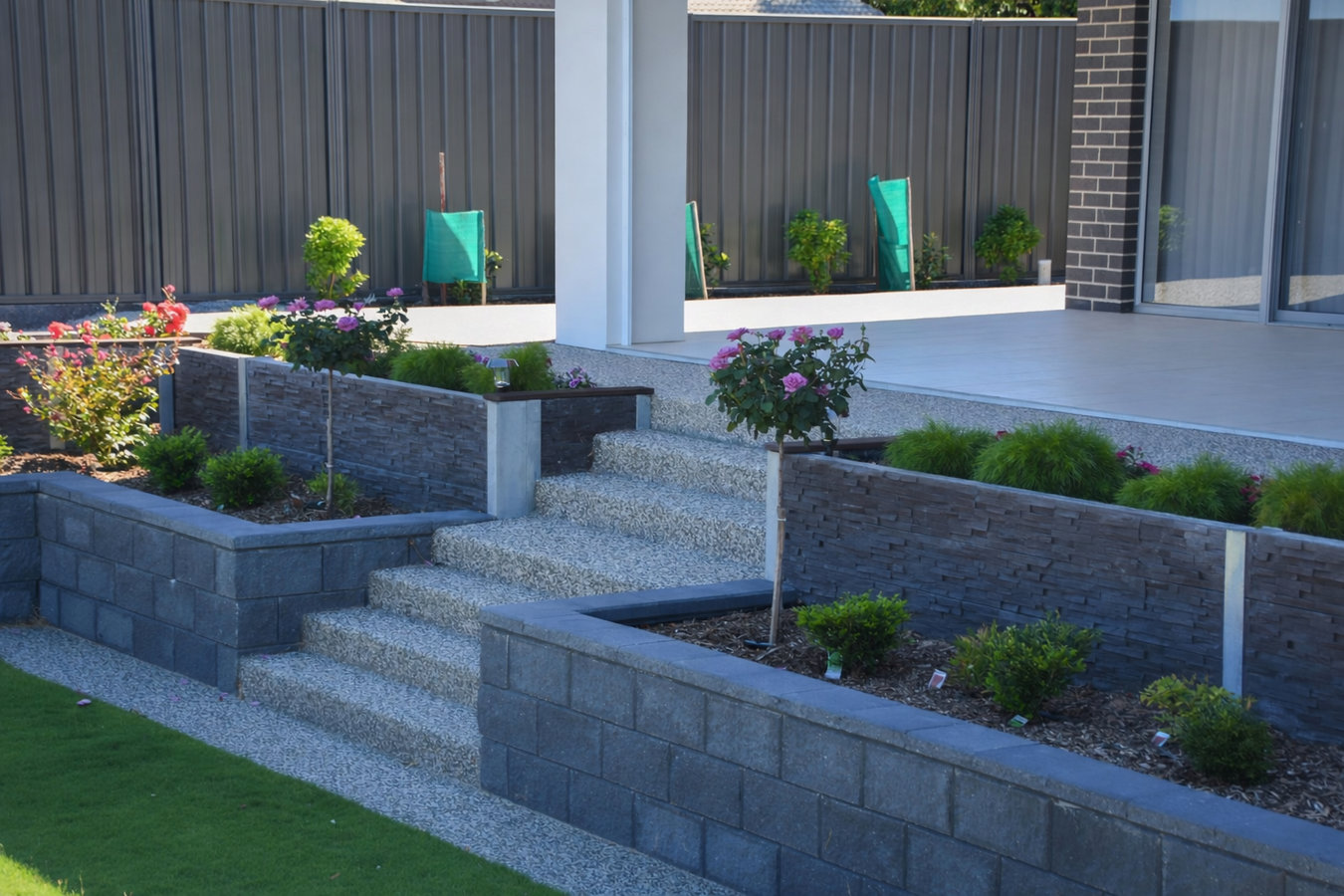
Losing yard to erosion after every storm? A properly built concrete retaining wall stops the slide, levels your property, and holds up to Eagle Pass clay soils and summer downpours.
Concrete retaining walls in Eagle Pass hold back soil on sloped or uneven lots, preventing erosion and creating flat, usable ground where none existed before - most residential walls take one to three days of active work, plus several days of curing before backfilling can begin.
Many Eagle Pass homeowners have sections of their yard that slope too steeply to use, plant, or even mow safely. A concrete retaining wall cuts into that slope, holds the cut side in place permanently, and gives you level ground for a patio, garden, parking pad, or simply a yard your family can actually enjoy. The wall also redirects rainwater away from your home rather than letting it pool against your foundation.
If the wall is part of a larger project - leveling a yard for an outdoor living space or supporting a new structure - pairing it with concrete floor installation on the reclaimed flat area is a common and efficient combination.
If you see bare patches on a slope, mulch migrating into your driveway, or soil washing toward the street after storms, your yard is actively losing ground. Eagle Pass summer storms arrive fast and hard, and an unprotected slope loses a little more each time.
A section of your property that is too steep to mow, plant, or walk across safely is wasted space. Grading it without a wall just moves the problem - a concrete retaining wall holds the cut permanently and turns that corner of your lot into something useful.
An older wall - timber, block, or poured concrete - that has started to tilt forward, developed wide cracks, or shows sections pulling apart is under stress it can no longer handle. A leaning wall does not fix itself. It continues to move until it fails, often taking landscaping or fencing with it.
If rainwater channels toward your foundation instead of away from it, every storm is a slow threat to your home's structure. A retaining wall combined with proper grading redirects that flow. In a climate where storms arrive fast and drain slowly, keeping water away from your foundation is worth investing in early.
Every concrete retaining wall we build starts below grade - a footing dug deep enough to sit in stable soil, reinforced with steel, and poured to resist the constant outward pressure of the earth behind it. We do not pour walls without footings, and we do not skip the steel reinforcement inside. Those two elements are what separate a wall that holds for decades from one that shifts or cracks in the first few wet seasons.
Drainage is built into every wall we pour - not added as an afterthought. Gravel backfill and a perforated pipe behind the wall channel water to a visible outlet at the base. After a heavy Eagle Pass rain, you should see water draining from that outlet. For homeowners who need a wall paired with a new outdoor surface or structure, we also handle concrete footings for anything going on top of or adjacent to the leveled area.
For homeowners who need to stop erosion, create usable lawn space, or redirect water away from their foundation.
Walls above four feet that carry significant soil loads and require an engineer's design and city permit before work begins.
Full-system builds that include gravel backfill and perforated pipe to protect the wall from water pressure over time.
Eagle Pass sits in the Chihuahuan Desert borderlands, where summer temperatures regularly exceed 100 degrees F and most of the annual rainfall arrives in short, intense bursts during late summer and early fall. Both of those conditions matter for a retaining wall. Concrete poured in peak afternoon heat sets too fast, leaving the mix weaker than it should be - a detail that only shows up as a problem months or years later. And when a heavy storm drops several inches of rain in an hour, the soil behind a wall can become fully saturated in minutes, dramatically increasing the pressure pushing outward. Drainage is not a nice-to-have here - it is what keeps your wall standing after the third or fourth major storm.
The clay-heavy soils that run throughout Maverick County add another layer of stress. Clay expands when wet and contracts sharply when it dries out - and this part of South Texas swings between both conditions seasonally. A wall built here needs a footing that goes deep enough to sit below the zone of active soil movement, plus reinforcement designed for that lateral load. Homeowners in Brackettville and Carrizo Springs face the same soil and climate conditions - we work in both areas regularly and know what it takes to build walls that last out here.
We respond within 1 business day. Tell us the approximate length and height of the wall, the slope involved, and what is on either side. We will schedule a free on-site visit - quotes over the phone are not how we work, because soil conditions and site access both affect the cost.
We visit the property, assess the slope and soil conditions, identify drainage needs, and confirm whether a permit is required. You get a written estimate with a clear scope of work - no surprises after you sign.
For walls above the local height threshold, we handle the permit application and coordinate any required city inspections. Once approved, we excavate the footing trench, set forms, and place steel reinforcement before any concrete is poured.
We pour and finish the wall, let it cure for several days before removing forms, and install gravel backfill and drainage pipe before replacing soil. We walk you through the finished wall, point out the drainage outlets, and close out the project.
Free on-site estimate. We visit your property, assess the slope and drainage, and give you a clear written quote - no pressure.
(830) 213-7411We build every wall with a footing depth and drainage design matched to the expansive clay soil common across this part of South Texas. That is not a generic process - it reflects what actually fails here and what actually holds. Walls we build in this county are engineered for local ground conditions, not an average from somewhere else.
We schedule pours for early morning during warm months and use cooler mix water to stay ahead of the heat. Fresh concrete in Eagle Pass summers sets faster than the standard process assumes - we manage that gap so the finished wall is as strong as it looks. Ask us to walk you through our hot-weather practices before any work starts.
Every wall we pour includes gravel backfill and perforated pipe routed to a visible drainage outlet at the base. We treat drainage as structural - because in a climate where intense summer storms are the rule, it is. The American Concrete Institute sets guidelines for retaining wall design that address exactly this - see{" "}concrete.org for context on those standards.
Walls above the local height threshold require a city permit and inspection in Eagle Pass. We handle the application, coordinate the inspection schedule, and make sure the wall is closed out properly before we leave. An unpermitted wall creates problems at resale - we never recommend skipping this step.
Knowing how to pour concrete is one thing - knowing how to pour it for Eagle Pass clay soils, summer heat, and intense rain events is what separates a wall that holds for decades from one that leans or cracks in a few years. That local knowledge is what we bring to every job.
Once your slope is leveled and held in place, add a poured concrete floor to the new flat area for a finished, usable surface.
Learn MoreEvery retaining wall starts with a footing - learn how properly designed footings protect your wall from soil movement over time.
Learn MoreEvery slope is different - the sooner you call, the sooner we can visit your site, assess the drainage, and give you a clear plan before the next storm season.